
Reparations And The Historical Hierarchy Of Suffering
The United Nations declares the enslavement of Africans is the "gravest" crime against humanity and seeks reparations. What about the historical suffering of women?
It seems the world has forgotten the suffering of our female forebearers.
The United Nations recently created a hierarchy of atrocities in which it ranked the transatlantic slave trade as the “gravest crime against humanity.”
Forgotten apparently are the practice of throwing female babies off a cliff due to a preference for sons (China), throwing widows on their husbands’ funeral pyre (South Asia), female genital mutilation (Africa), and executing women as witches because they threatened the male social order (New England).
Also forgotten are the centuries of legally classifying women (like slaves) as chattel to deny them rights to their children, to own property, or to be free from violence.
(This may be hard to believe but many older women today remember (because they experienced it) when women were denied entry to medical and law schools due to quotas, unable to get a credit card in their own name, and were blamed for sexual assault because they sipped a beer and and wore a v-neck sweater.)
Domestic Violence
I researched the legal history of women when I wrote an introduction to a three-volume series on domestic violence, Domestic Violence: From a Private Matter to a Federal Offense.
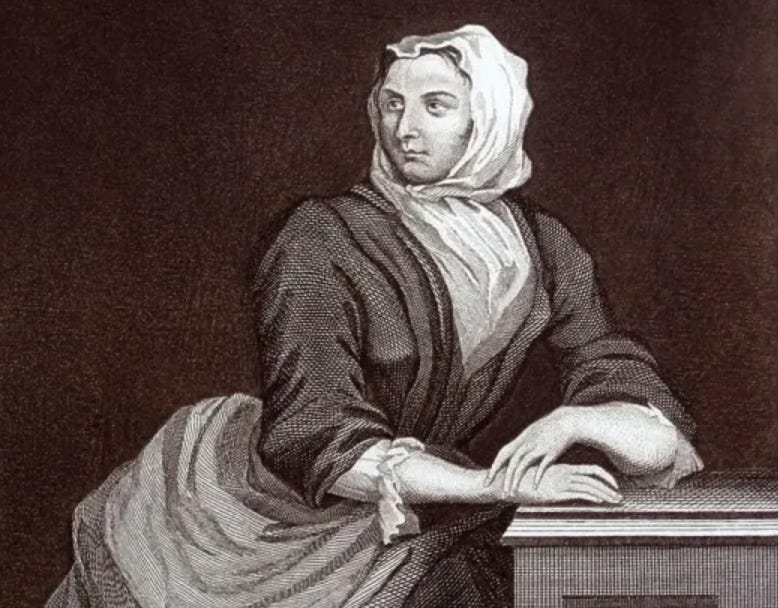
I wrote about the 1849 case of Susannah Palmer, an English charwoman who was married to a drunken thief. He threw her into the streets one night to make room in their bed for another woman. The next morning, he blackened her eyes and knocked out five of her front teeth. After a number of such incidents, she fled with their children. He pursued them, took her meager earnings, and sold her furniture. Police said nothing could be done because he had not deserted her.
The common law in England — and America — then held that husbands could beat their wives with a stick that was no bigger than their thumb.
One night, Susannah was cutting bread for the children’s supper, and he began to beat her. He was cut slightly by the knife blade when she raised her hands to protect herself. She was arrested, convicted of unlawful wounding, and sent to Newgate prison.
What’s the point of comparing violence against African Americans and women? There is none. So why is the UN insistent upon doing so?
Fast forward 150 years. There were some laws in place to protect wives but they were not enforced.
Tracey Thurman, a Torrington, CT, homemaker, notified police of repeated threats on her life by her estranged husband, Charles J. Thurman, Jr., a short-order cook at a local diner frequented by police. Police did nothing.
On June 10, 1983, Charles appeared at her doorstep in violation of a civil restraining order. Tracey called the police but, after 15 minutes they hadn’t arrived. She tried to talk to Charles and opened her door. He stabbed her in the chest, neck, and throat. Twenty five minutes after Tracey’s call, a police officer finally arrived. In his presence, Charles kicked Tracey in the head and ran into the house and to get their baby. He dropped the infant onto her bloody chest. Again, he kicked her in the head.
Three more officers arrived but they didn’t take Charles into custody until until Charles approached his wife a third time — as she was lying on an ambulance stretcher (now partially paralyzed).
The Thurman case became an important legal milestone because she was the first to sue a municipality for violating her civil rights by failing to protect her. A jury awarded her $2.3 million in damages (later reduced to $1.9 million) and her son $300,000 in damages.
Police departments around the country suddenly recognized they faced liability for not taking domestic violence seriously and they began to enforce domestic violence laws.
Women today are still far more likely than men to be killed by an intimate partner. Black women are disproportionately affected. While black women make up 13.4% of the population, they accounted for 29.9% of female intimate partner homicide victims between 2018 and 2021.
FYI, the enslavement of Blacks in America spanned approximately 250 years, and ended after the Civil War with the 1865 ratification of the Thirteenth Amendment. By contrast, the Equal Rights Amendment, first proposed in the 1920s, officially failed in 1982, with three states short of the required number for ratification.
The African country of Ghana spearheaded the resolution declaring the transatlantic slave trade as the “gravest” crime against humanity, arguing the classification is valid based on the trade’s unparalleled scale, systemic brutality and enduring legacy. The UN resolution calls for reparations.
The resolution was adopted by a vote of 123 to three (with 52 abstentions, including the United Kingdom and EU member states). The three countries who cast a “no” vote were the United States, Israel and Argentina.
U.S. Deputy Ambassador Dan Negrea said the U.S. condemns slavery but argued the resolution has no basis in international law. He said the U.S. "does not recognize a legal right to reparations for historical wrongs that were not illegal under international law at the time they occurred." Moreover,, Negrea said, “The assertion that some crimes against humanity are less severe than others objectively diminishes the suffering of countless victims.”
Countless women around the world and throughout history have suffered serious crimes against humanity because they were women. To my knowledge, there has never been an organized movement to demand reparations. If African Americans are entitled to compensation, maybe women should be too?