
Historic AI Case Unresolved; Dismissed On A Technicality
Judge says Elon Musk's lawsuit is time-barred, leaving unresolved whether the mission of OpenAI to develop Artificial Intelligence to benefit humanity was subverted by Silicon Valley hucksters.
Lost in all the hoopla was the importance of the trial to history.
Artificial intelligence could have been developed to benefit mankind, rather than to line the pockets of assorted Silicon Valley hustlers.
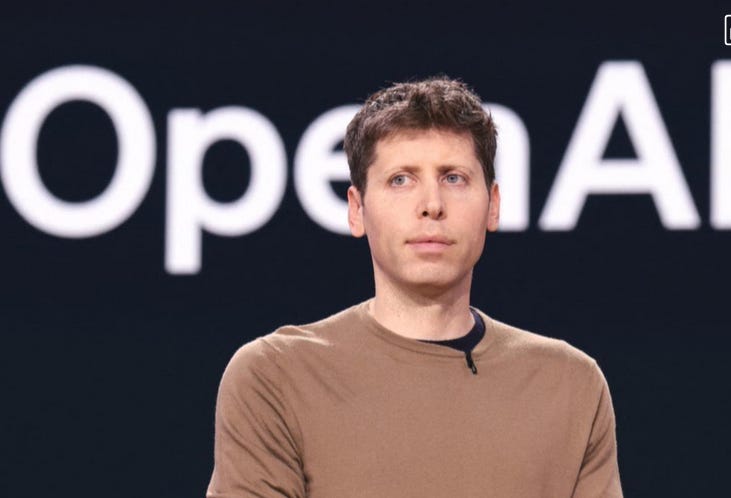
Tesla CEO Elon Musk alleged in a lawsuit that Sam Altman, CEO of OpenAI, and Altman’s long-time associate Greg Brockman, “conned” him into supporting the venture on the premise that it would develop artificial intelligence safely for the benefit of humanity, sharing research and technology broadly. Musk says he provided tens of millions of dollars in seed capital, and recruited top AI scientists.
OpenAI, Inc. was registered in 2015 in Delaware as a non-profit organization.
Over the years, Musk alleges, Altman breached the terms of the “Founding Agreement” by establishing a web of for-profit OpenAI affiliates that systematically drained the non-profit of its technology and personnel to benefit those affiliated for-profit entities.
Musk left OpenAI in 2018 after disagreements with the board about control, and launched his own AI company, xAI, in 2023. Altman claims Musk’s lawsuit is an attempt to bolster xAI.
Musk said he realized that OpenAI had abandoned its non-profit mission in 2022 when Microsoft invested $10 billion in the company. He said reassuring statements by Altman caused him to delay filing the lawsuit.
OpenAI is slated to complete its evolution from a non-profit organization to a for-profit entity later this year when it plans to go public. The estimated valuation is $1 trillion.
It matters whether the trajectory of AI was subverted by Silicon Valley greed.
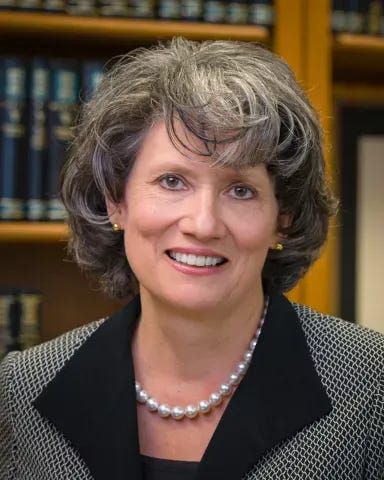
Yet, U.S. District Court Judge Yvonne Gonzalez Rogers of Oakland, an appointee of former Democratic President Barack Obama, dismissed the case Monday on a technicality, finding the lawsuit was barred by the statute of limitations.
The outcome is a testament to the brilliance of the Altman defense team, which managed to turn Rogers’ attention away from the merits of the case and toward the timeliness of the lawsuit. Clearly, it would have been much more difficult for Altman and his colleagues to address Musk’s claims, given the evidence, including the fact that OpenAI was initially registered as a nonprofit.
Musk has said he plans to appeal Rogers’ dismissal.
“She just handed out a free license to loot charities if you can keep the looting quiet for a few years,” Musk said.
Why Was The Trial Effectively Closed To The Public?
It’s hard to imagine anything of more historical importance today than the birth and evolution of AI, which is already transforming the world.
A recent Economist/YouGov poll found that 64% of Americans say it is slightly or very unlikely that AI will create economic gains that benefit everyone, and 60% of adults under 30 are somewhat or very worried that AI will replace the jobs they rely on.
Was it inevitable that Americans would fear the AI revolution? Would those fears have occurred if OpenAI was developed to benefit humanity, rather than to line the pockets of Altman and his associates?
Many questions remain unanswered because the only accounts that exist are from the media, which played the trial as a clash of titans rather than as an important milestone in the evolution of AI.
The three-week trial was effectively closed to the public.
Rogers decided the trial would not be video streamed or televised, so there is no way for the public to judge whether it was handled in a fair and impartial manner. Musk didn’t think so. He called Rogers a “terrible activist Oakland judge who simply used the jury as a fig leaf.”
Rogers apparently authorized a contemporaneous audio feed on a little-known court YouTube channel but stipulated that “recording or rebroadcasting the audio livestream is strictly prohibited.” A search for the audio broadcast on the channel Monday produced no results.
With respect to Musk’s “fig leaf” criticism, Rogers empaneled a nine-member jury to serve in an advisory capacity to resolve the question of when Musk knew or should have known about the alleged theft of OpenAI’s charitable status by Altman — that is, when the statute of limitations clock began to run.
The court summoned a pool of 40 potential jurors, three times larger than normal for a civil case, to account for hostility toward Musk, who worked with Republican Pres. Donald Trump to cut wasteful spending in 2024.
Reportedly, many jurors expressed negative sentiments toward Musk; one candidate was dismissed by Rogers for stating he could not remain impartial.
Rogers acknowledged the “reality is that people don’t like him … Many people don’t like him, but that doesn’t mean that Americans nevertheless can’t have integrity for the judicial process.”
Despite hearing evidence for three weeks, it took the jury less than two hours to reach a verdict on Monday, unanimously ruling that Musk was time-barred from litigating the case because he was aware of the issues before August 2021, which exceeded the three-year statute of limitations.
Rogers immediately accepted the conclusion as justified by the evidence, and dismissed the case.
Open v. Closed AI
Musk says he named the venture “OpenAI” to celebrate what he was led to believe was its mission.
In the early days, the technology was open source but, Musk warns, that is not the case today
He said the defendants lured him with fraudulent philanthropy, exploited his money, stature, and contacts to secure world-class AI scientists with the goal of “feeding the non-profit’s lucrative assets into an opaque profit engine” to cash in.
The lawsuit charged the defendants with promissory fraud, constructive fraud, aiding and abetting fraud, violations of the federal racketeering act (RICO), breach of express contract, unfair competition under California’s business and professional code, false advertising, aiding and abetting breach of fiduciary duty, and tortious interference with contract.