Appeals Court Denies Asylum To Woman Raped By Two Men
The U.S. Court of Appeals for the Ninth Circuit ruled a Salvadoran woman who was raped by two men in El Salvador didn't show she was targeted because of her gender, clearing the way for deportation.
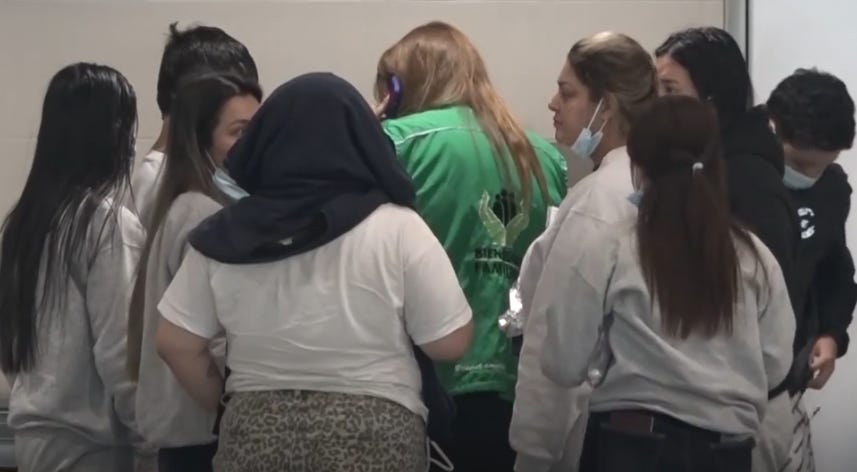
In a troubling decision, two judges on a three-judge panel of the U.S. Court of Appeals for the Ninth Circuit based in San Francisco have rejected a woman’s plea to avoid deportation to protect her from rapists in her home country of El Salvador
The immigrant, Fatima Guadalupe Monjaras-Segovia, testified that she fled El Salvador after she was raped by two men, Ramiro Lemus and Moise Gomez Contreras, who viewed her as property.
Under U.S. asylum law, being a member of a “particular social group” (PSG) is one of five protected grounds for asylum, along with race, religion, nationality, and political opinion. Interestingly, asylum claims by LGBTQ+ individuals from El Salvador are routinely approved. This raises the question of why is sexual violence against women treated differently?
The Board of Immigration Appeals (BIA) rejected Monjaras-Segovia’s asylum claim and ordered her - and her daughter - to be deported back to El Salvador. She petitioned the appeals court to stop their deportation but two of the three judges on the Ninth Circuit panel rejected her appeal. The third dissented.
Judge Jonnie B. Rawlinson, the first African American woman to serve on the Ninth Circuit, and Judge Lawrence J.C. VanDyke found she failed to establish the “required nexus” between violence against women in Central America and “the harm she experienced and feared” from the two men who assaulted her.
They said “substantial evidence in the record” showed the men “abused Petitioner for personal, sexual reasons,” and not because domestic violence and rape are widespread due to El Salvador’s poor enforcement of laws against domestic violence and rape.
Dissent
The other judge on the panel, Salvador Mendoza, Jr., dissented, arguing that Monjaras-Segovia was targeted for violence because of her gender. In addition to her sworn testimony, Judge Mendoza said it is well documented that there are “‘endemic’ levels of rape and violence against Salvadoran women.”
Mendoza pointed to testimony by Monjaras-Segovia that one of her rapists, identified as Moise Gomez Contreras, “was clear about his motives … after kidnapping and raping her, [he] said that I now belong to him, that I was his woman.” She testified that he imprisoned her for a week and threatened to “kill her if she did not continue ‘to be his woman’” and stated to others that “I was now his woman.”
Judge Mendoza, who is the son of migrant farmworkers from Mexico, likened women in El Salvador to a “particular social group” that is subject to persecution by men.
“Because the record compels the conclusion that Petitioner’s gender was at least part of the reason she was persecuted, I would grant the petition in part and remand to the BIA to reconsider the remainder of her withholding of removal arguments,” wrote Mendoza.
He added: “Membership in a particular social group must be ‘one central reason’ for an asylum applicant’s persecution, but need only be “a reason” for withholding of removal.”
Rawlinson and Van Dyke agreed that El Salvador’s government “poorly enforces” laws against violence and rape but said this “does not compel a conclusion contrary to the [BIA’s] decision because such generalized evidence is not relevant to Ramiro’s or Moise’s specific reason for harming Petitioner.”
Without establishing a nexus between her alleged persecution and the proposed past harms and feared future harm, they concluded, “Petitioner is ineligible for asylum and withholding of removal.”
Violence Against Women
The country of El Salvador does not publish official statistics, but reports show that violence against women, including rape and femicide, is widespread there due to lack of reprisal, lack of access to justice, and normalization of violence.
The U.S. Department of State reports that domestic violence and rape are a “widespread and serious problem” in El Salvador, where an estimated 63% of women ages 15 to 19 and 72% of women ages 30 to 34 report having suffered sexual assault.
The Organization of Salvadoran Women for Peace (ORMUSA) states that in 2024 and 2025, authorities reported 18,949 cases of gender-based violence, 8,938 of which involved sexual assault.
ORMUSA states the latest data (January 1 - May 31, 2026) shows there were 2,476 reported pregnancies among girls and adolescents, including 2,364 pregnancies among girls aged 15 to 19 and 112 pregnancies among girls aged 10 to 14. The group says these pregnancies are often the result of domestic violence.
The actual incidence of rape and domestic violence in El Salvador are believed to be much higher.
The bottom line - deportation is messy. Americans elected GOP President Donald J. Trump to address the millions of illegal immigrants who were allowed to cross U.S. borders during Democrat Joe Biden’s four-year term of office. But why are women treated differently than, for example, LGBTQ+ asylum seekers when both are fleeing violence because of who they are.


Well, we can't exactly allow asylum claims for every woman in the world who has been raped. That would probably be about half the world's population outside of the developed countries. In Muslim controlled countries, men can marital rape children. Having specific laws and policies that facilitate rape should be a valid reason to offer asylum. Women and children from those countries deserve our protection.
I would also like to see women in Australia, especially lesbians, offered asylum now that men officially have female sex-based rights. Women can no longer use technology to keep men from harassing them online. Those are official government policies that oppress women. What a great reason to offer asylum. We should also take away all funding from countries like Australia that have prioritized male rights above female.
Transgender people keep claiming that nobody likes them because they're trans. In reality, people don't like being oppressed in the name of transgender ideology.